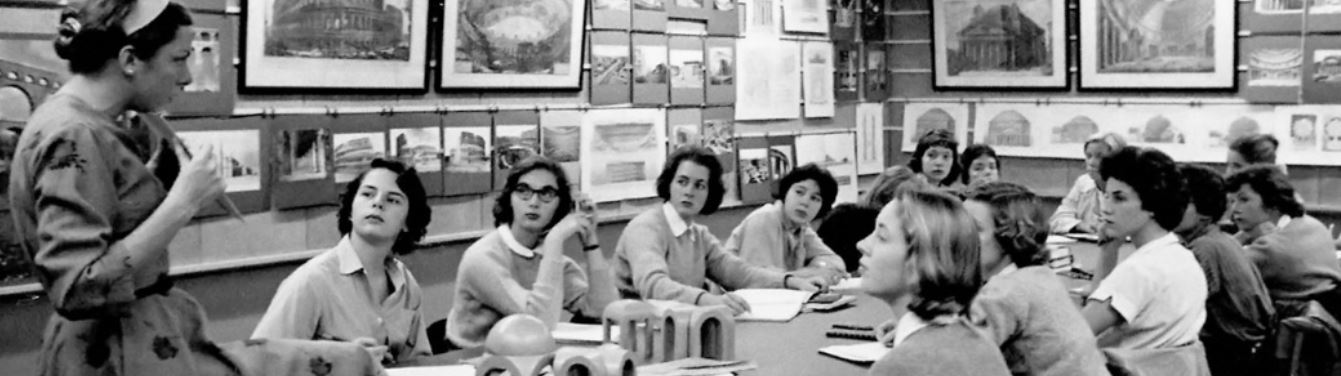
“Conflict is a sine qua non of reflection and ingenuity”

Conflict is the gadfly of thought. It stirs us to observation and memory. It instigates invention. It shocks us out of sheep-like passivity and sets us at noting and contriving… Conflict is a sine qua non of reflection and ingenuity. Dewey (1916, p. 188)

As outlined by Elizabeth F. Barkley in Student Engagement Techniques: A Handbook for College Faculty, “academic controversy” is a cooperative learning technique in which learners are grouped to debate two opposing views on an issue before attempting to reach a consensus on the issue (Barkley 199).

I have used debates in classes before to have students discuss issues that have sparked academic controversies, but I have never formally structured the activity in a way where students debate each side, before working toward a unanimous decision. Ideally, this student engagement technique (SET) would be implemented in one, three-hour session, where I present a highly contested topic for example the much-debated work by Andres Serrano, Piss Christ from 1987. Students could then research the troubled history of the work and form opinions as to if the piece is a thoughtful work of art or an outrageous blasphemy. In doing so students would not only learn about Serrano’s production but also the art market in the late 1980s, contemporary museum practices, theories in conceptual art, and what is often referred to as the field of cultural production. Ideally this SET would provide an opportunity for students to consider the often very complex, nuanced perspectives at play in art production. As Barkely notes, “participation in this SET challenges students to grapple with an fundamental dilemma in the discipline and deepens their understanding so that they are better prepared to address the issue either as future art historians or as citizens who care about the collections in their local, state, and national museums” (Barkley, 201).

Initially, the role of the educator is to select an appropriate, applicable controversy for the students to debate. As in other situations it is important that the task provide an optimal level of challenge, where the concepts are sufficiently difficult to stretch thinking, but not so difficult as to dampen the motivation (Barkley, 27). During the exercise the educator must truly facilitate the discussions in a way that moves the thinking along but does not stifle the sharing of opinions. Finally, the educator must conclude the exercise by leading an appropriate debrief that aligns the ideas discussed to the learning objectives and allows for students to make connections to other applications. 

Academic controversy is a great SET to use because the good far outweigh the bad. According to Jacobs, the strategy “maintains the educational benefits of controversy, while blending the benefits of cooperation, in order to facilitate an environment that encourages everyone to take part, to learn, to support the learning of others and to address important issues” (Jacobs, 295). It encourages a range of modes of expression other than speaking, for students to present their findings. Another consideration is the ways in which teachers, peers, and materials provide scaffolding for struggling students. And ultimately by encouraging students to empathize and argue different sides of an issue, the activity promotes agile, critical thinking (Jacobs, 293-295). Some of the cons for this SET include the potential for one person or pair to dominate the conversation, the activity could require an extended period of time to allow students to thoroughly research the topic and form a cooperative group, and the issue could become too controversial for students come to an agreement. That being said all of these disadvantages can be avoided if the teacher has created a positive learning environment where students can collaborate and respectfully challenge ideas.

I am excited to include the Academic Controversy SET in my lesson planning for this fall. Not only is it a fun activity but as Jacobs suggests, “The supportive environment promoted by cooperative learning techniques such as Academic Controversy makes it more likely that these issues can be addressed not just as academic topics to debate in class but also as real world matters that require real world actions” (Jacobs, 295). As such, I am looking forward to utilizing it as just one more way to promote active, engaged learning in art history classrooms.

References

Barkley, E.F. (2010) Student Engagement Techniques: A Handbook for College Faculty. San Francisco: Jossey-Bass.

Csikszentmihalyi, M. (1990). Flow: The psychology of optimal experience. New York: Harper &Row.

Dewey, J. (1916). Democracy and Education: An introduction to the Philosophy of Education (1966 ed.). New York: Free Press.

Jacobs, G. M. (2010). Academic Controversy: A cooperative way to debate. Intercultural Education, 21 (3), 291-296.

Piaget, J. (1975) Equilibration of cognitive structures. Chicago: University of Chicago Press.
 

Digital Literacy in the Classroom

I came across this article on The Educational Uses of Digital Storytelling by Bernard R. Robin from the University of Houston that addresses some of the issues raised in this forum.

Abstract: Digital Storytelling has become a powerful instructional tool for both students and educators. This article presents an overview of Digital Storytelling and describes where it came from, how it can be used to support instruction and how students who learn to create their own digital stories improve multiple literacy skills. In addition, information is presented about the tools that can be used to support the educational use of Digital Storytelling. The article also includes a discussion of challenges and other important considerations that students and educators should be aware of before implementing the use of Digital Storytelling in the classroom, and concludes with an overview of the research that has been and needs to be conducted on the effectiveness of Digital Storytelling as a teaching and learning tool.

I like that Robin acknowledges the78934f59b9fd1e3f356ad085e7c9393b potential for digital storytelling to be a two-way street. He notes, “The process can capitalize on the creative talents of students as they begin to research and tell stories of their own as they learn to use the library and the Internet to research rich, deep content while analyzing and synthesizing a wide range of content. In addition, students who participate in the creation of digital stories may develop enhanced communications skills by learning to organize their ideas, ask questions, express opinions, and construct narratives. It also can help students as they learn to create stories for an audience, and present their ideas and knowledge in an individual and meaningful way.”

Furthermore, Digital Storytelling provides a strong foundation in various types of 21st century skills, such as information literacy, visual literacy, technology literacy, and media literacy. Totally inspired, I am going to look at ways to include Digital Storytelling in my next syllabus.

My Top Ten Student Engagement Techniques

OLD-ART-CLASSROOM-Radio-cut-Copy-

Inspired by Elizabeth F. Barkley’s Student Engagement Techniques: A Handbook for College Faculty I have drafted a list of the ten I am going to incorporate in my classes next semester:

1) Artifacts – Present a physical object that represents key ideas to prompt observation and discussion.

2) Focused Reading – Identify 3-5 themes or concepts for students to look for in an assigned text.

3) Quotes – Distribute slips of paper with quotes for students to consider then discus.

4) Seminar – Students prepare for an in-depth, focused discussion of a topic in small groups.

5) Classify – Distribute items (specimens, images, objects) for students to classify and explain their categorization.

6) Academic Controversy – Students partner up to argue for and against two sides of a controversial topic.

7) Split Room Debate – Present a topic or case study then divide students to argue each side, moving about the room according to their opinion.

8) Team Concept Maps – Teams of students draw diagrams of ideas or concepts.

9) Letter – Students assume the identity of a key figure and write a letter explaining their contribution, theory, or significance.

10) In Class Portfolio – In small groups students organize notes, assignments, reflections, etc. into portfolios for submission.

Concordia Flips Out!

Benoit-Antoine Bacon highlighted the CIF applicants’ impressive range of ideas, that encompass everything from a science-focused journalism lab to game-related programming.

Check out how Concordia is flipping classes!

Note the contributions from Art History:

Art History, Art Education, Theatre and History

Course: Right to the City: Post-Industrial Ecologies
Project lead: Cynthia Hammond
Term accepted: Winter 2015
The Innovation: “The teaching challenge we wish to meet is to help students learn in place, from a place, and with its residents and social organizations — in this case, in Montreal’s south-west post-industrial neighbourhoods. Our design challenge, as educators, is to find ways to encourage students’ participation in what sociologist Henri Lefebvre famously termed the ‘right to the city,’ by which he meant the power to change the city, to render it more inclusive, responsive, and respectful.”

Course: HIST387 – Museums & Heritage in a Globalized World
Course: ARTH615 – Postcolonial and Indigenous Theories and Methodologies for Art History in North America
Project lead: Erica Lehrer and Heather Igloliorte
Term accepted: Winter 2015
The innovation: Lehrer:Our proposal is innovative in particular with respect to bridging student learning experiences across a variety of boundaries — including individual and group learning; theory and practice (or critique and creation); academy and community; aesthetic appreciation of material culture and cultural critique; undergraduate and graduate levels; Anthropology and Art History.”

Nice work Cynthia and Heather!

#Future Humanities

2

This weekend academics from around the continent are gathering at McGill University in Montreal to discuss the future of graduate studies in Canada. Future Humanities: Transforming Graduate Studies for the Future of Canada promises to be an important contribution recent debates on ways to reform the humanities for the 21st century.

In a Globe and Mail article on the event, organizer Paul Yachnin, the director of the Institute for the Public Life of Arts and Ideas, said “Maybe 15 to 20 per cent of people who enter PhDs get full-time academic work. That’s a remarkably poor showing. … It means that students who complete PhDs and put themselves on the academic job market and don’t get academic jobs feel like failures.”

For more on the conference see the program here.

Making art history come alive

Untitled

The year is 1625. You, Queen Anne of Austria, the wife of Louis XIII, King of France, would like to commission a portrait. Your mother-in-law, Marie de’ Medici, recommends Rubens, her court painter, but you are stubborn, and would like to have it your way. You know about this aspiring young genius, Rembrandt van Rijn, who, despite his young age, is known for his portraits. In your discussion, you will evaluate both artists’ portraits, will compare their styles and will choose the artist who will work on your commission. Will you follow the advice of your mother-in-law (after all, Rubens is the most sought-after portraitist in Europe)? Comment on your peers’ postings. You are free to choose any form for your writing assignment, a letter to your brother, King Philip IV of Spain, or a chat with your minister.

What a great assignment! This is just one of many great ideas I found in Making Art History Come Alive In The Online Classroom by Anahit Ter-Stepanian of Sacred Heart university in Fairfield. She explains, “Student engagement, development of critical thinking, and fostering original ideas are among the many challenges of online course design. This concern is particularly pertinent for courses in humanities, where the lack of face to face interaction and group discussions needs to be compensated with other methods resulting in similarly successful learning outcomes.”

#EngagedArtHistory

953538c0743b621e6dce5697ba09ebc7

At the College Art Association conference in February, Marie Gasper-Hulvat an Assistant Professor at Kent State University-Stark, presented her project, “Tweets, Secret Words, Bingos, and Blogs: Facilitating Engaged Participation in Art History Surveys.” 

Gasper-Hulvat astutely noted:

So many traditional art history survey classrooms function as venues for spectacular rather than participatory experiences: Students sit passively in immovable desks, staring at bright images on a screen that illuminates an otherwise dark classroom. The disembodied voice of their instructor tells (oftentimes quite compelling) stories about the projected images. The instructor is perpetually divided from the students by virtue of professorial authority, by controlling and narrating the images on the screen, by the implicit social contract established by the university setting. The professor remains the active and powerful agent who wields knowledge and grades while the students remain passive and receptive agents who receive all that is wielded at them.

Following her presentation Gasper-Hulvat posted an excerpt of her poster on the Art History Teaching Resources blog with the hope of discussing her methods with a broader audience and collecting other techniques professors use to actively engage students in art history courses, especially the notoriously difficult survey format.

Follow the discussion on Twitter #EngagedArtHistory!

Basic Syllabi/Assignments/Rubrics

Capture

In a recent review of Art History Teaching Resources (AHTR), The Reference & Information Services Section of the Art Libraries Society of North America, describes the website’s intention “in sharing teaching materials online goes beyond time-saving or convenience for fellow instructors; rather, they are interested in promoting pedagogical inquiry that can lead to innovative and engaging ways to teach art history.” Of particular note for my purposes is the section of AHTR on Basic Syllabi, Assignments and Rubrics. This is definitely a resource I am going to consult in the future!